Culture
Reading Adinkra: the symbols we wear without knowing their names
Adinkra is a script, not a pattern — and every symbol is a proverb in short form.
Read the pieceStyle · Desk 02
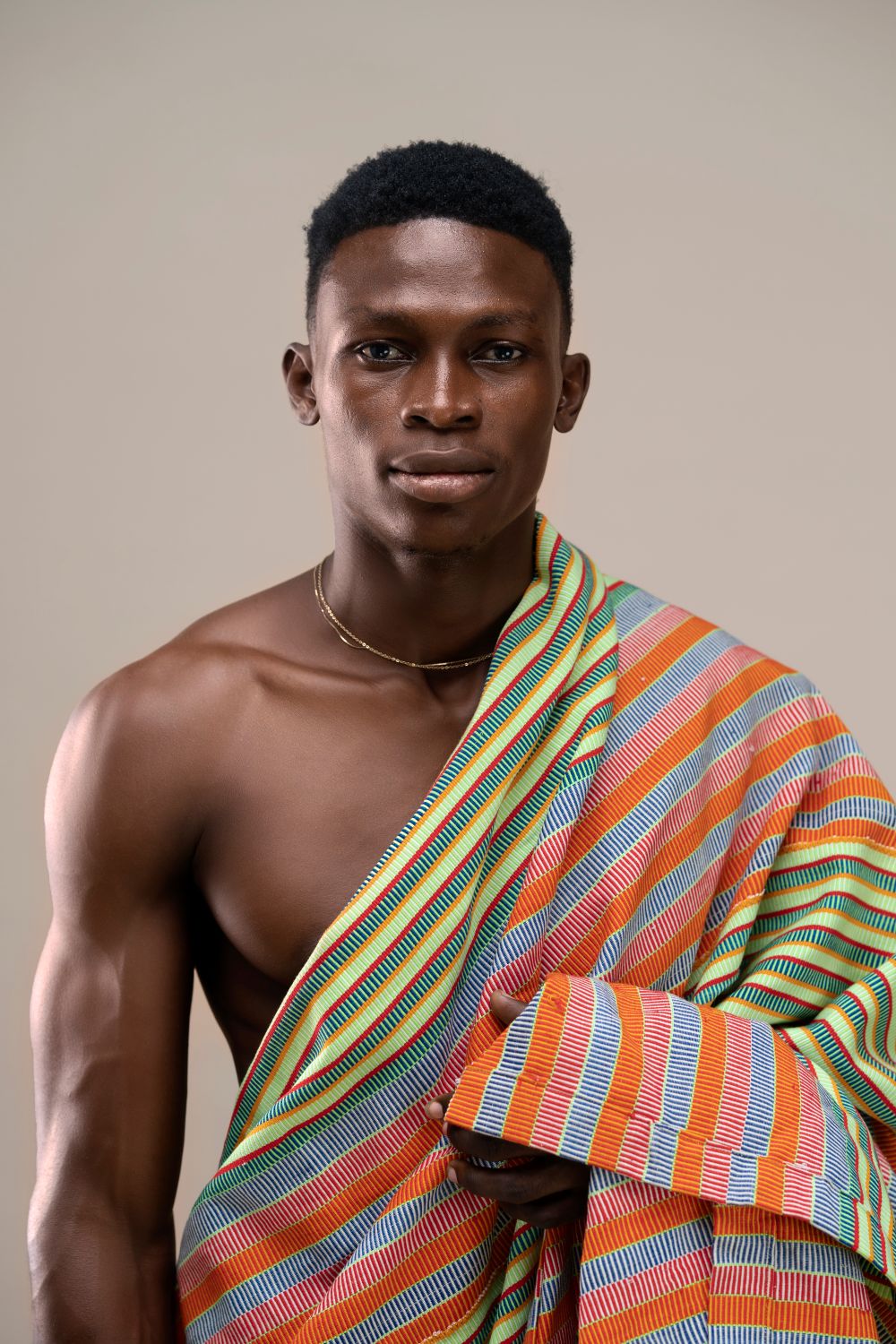
The cloth is woven in strips four inches wide and sewn into a garment. The reason is not economy. It is that a strip is a line, and a line can carry a name — which is how a piece of weaving came to hold proverbs, births, victories and grief.
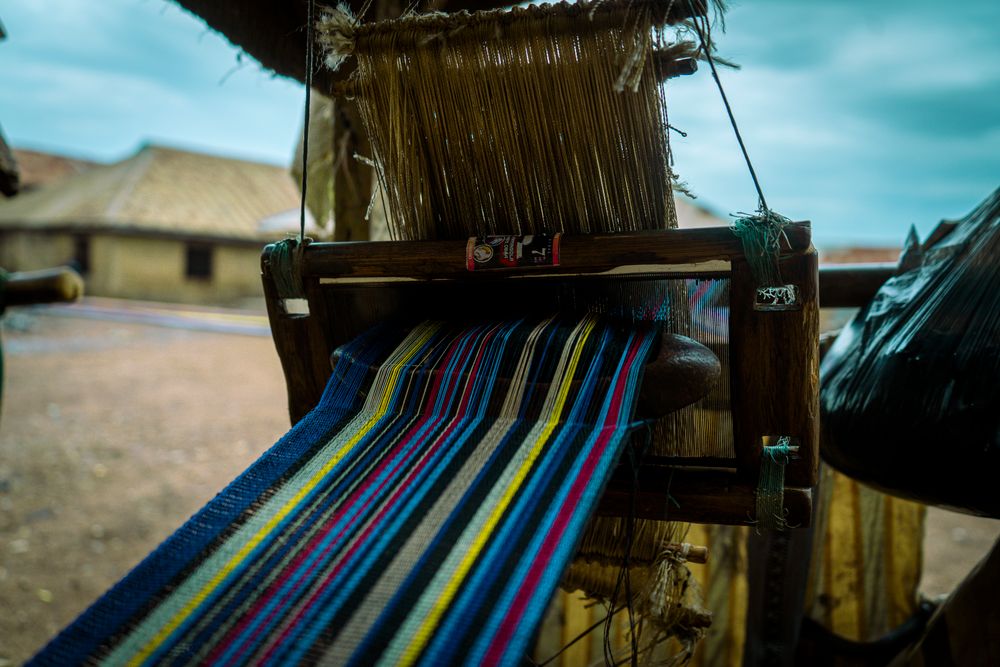
Ask a room of people what kente is and you will get a colour: gold, usually, or that unmistakable weave of yellow and black. Ask a weaver in Bonwire and you will get a name — because in kente the name came first, and the colours are only how the name is spelled.
The Akan loom is a horizontal treadle loom, and it produces a band. Not a bolt — a band, about ten centimetres across, as long as the weaver cares to keep going. Nothing about the loom forces this. A wider loom is not a difficult machine to build. The strip is a choice, and it is a choice about language: within one band a weaver can lay down a repeating figure, a rhythm, a motif that reads like a phrase, and then set the next band beside it so the phrases answer each other.
A man's cloth runs to about twenty-four strips, joined edge to edge; a woman's outfit is normally two pieces, a cloth and a blouse, from somewhere around eight to twelve. The joining is where you can see the skill. On a good cloth the pattern walks across the seams without breaking step. On a hurried one the figures land a half-centimetre out and the whole garment stutters — which is the single fastest way to tell a serious piece of weaving from a decorative one.
Kente patterns are named, and the names are proverbs, occasions or warnings. A few that are widely used:
Treat these as the widely used forms rather than a fixed catalogue. Names shift between weaving houses and between towns, the same figure can carry different names, and a cloth commissioned for a funeral may be named after the person it was woven for. That mutability is not sloppiness. It is how an oral archive behaves.
The colour symbolism is real, but it is usually over-simplified into a chart, and a chart is the wrong shape for it. Gold reads as royalty, wealth and status; black as maturity and spiritual strength, and also as mourning; green as growth, harvest and renewal; blue as peace, harmony and love; red as political passion and sacrifice, and in some contexts as mourning again. White belongs to purification and ritual.
The important part is the combination. A cloth is not a colour, in the way a sentence is not a word, and two cloths can share every colour and mean opposite things depending on the ground they are set against.
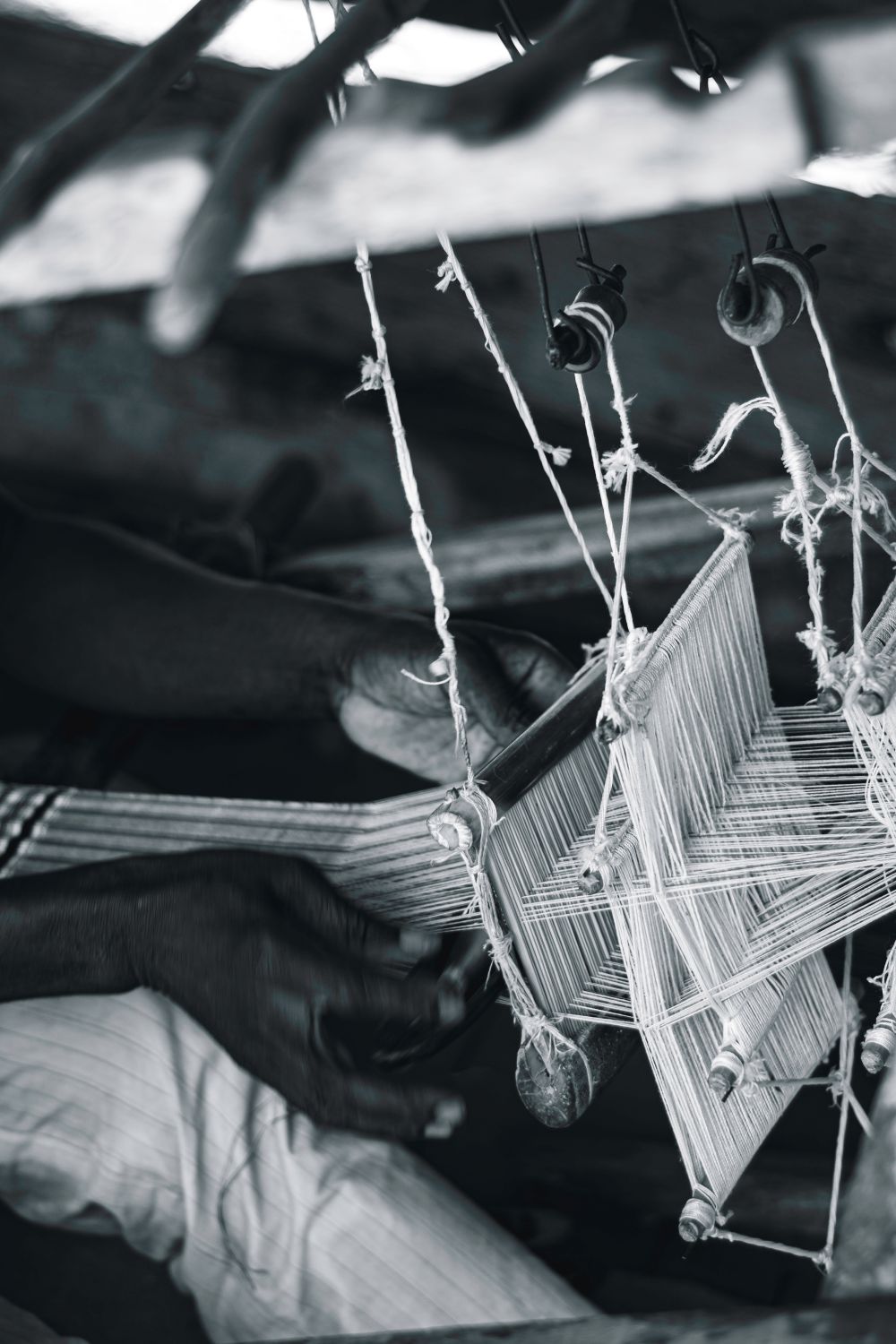
The weaving town is Bonwire, about twenty kilometres from Kumasi, where the craft is hereditary and the workshops are family businesses. Ntonso, nearby, is the equivalent town for stamped adinkra cloth. Both are working trades with shops, guides and school groups — and both are under pressure from machine-printed fabric that carries the look of the cloth without any of the labour.
That pressure is worth stating plainly rather than lamenting. Machine-printed kente is cheap, washable and available in any market in the world, and it has put a version of the cloth on people who could never have afforded a hand-woven one. What it cannot do is carry a pattern name, because the name is the weaver's decision and a printer has no reason to make it.
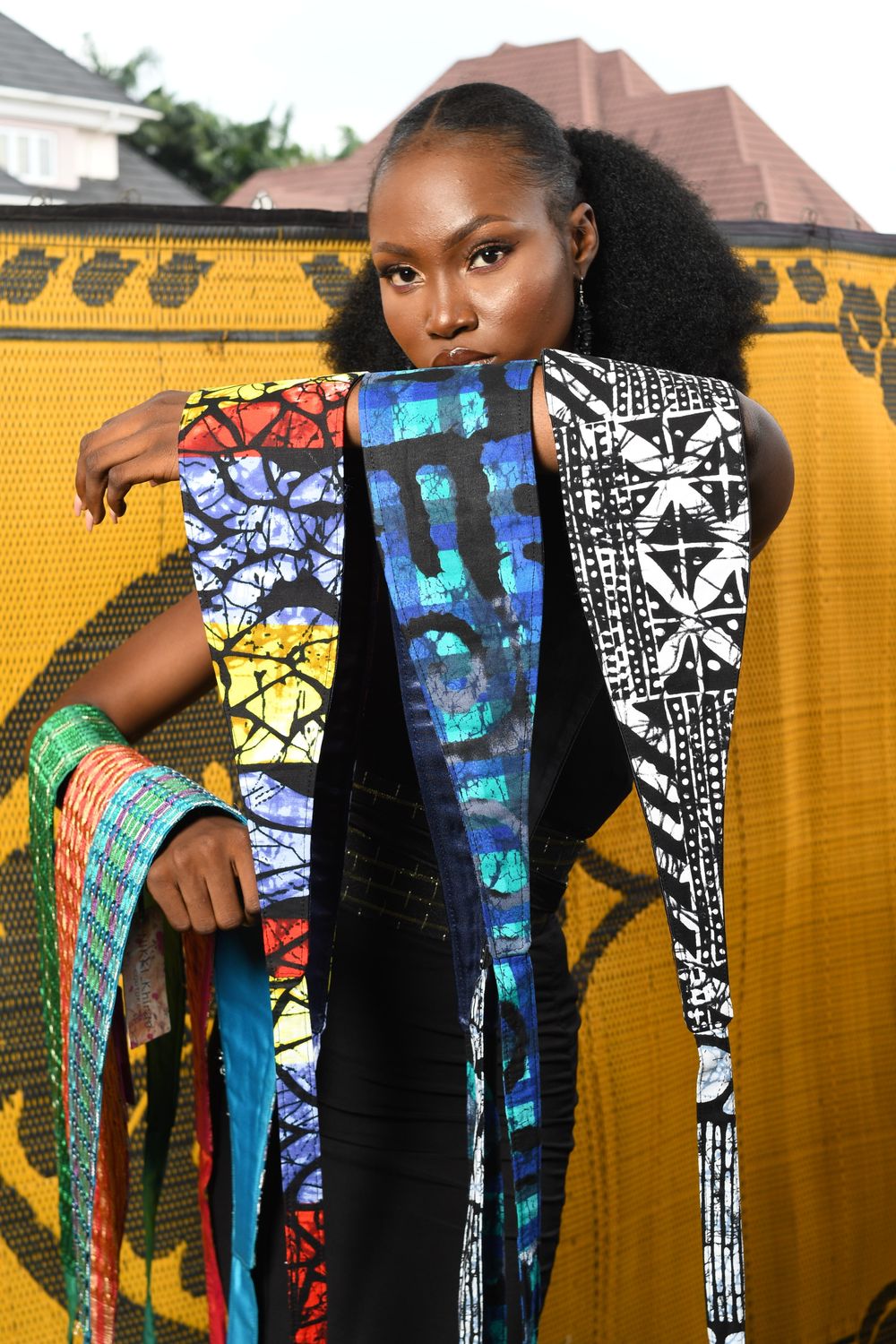
Kente travels better as a symbol than as a garment, and the clearest recent illustration came in 2020, when a group of legislators in the United States wore kente-print stoles while unveiling a policing bill. The gesture was meant as solidarity. The reaction in Ghana was largely not what they expected, because a cloth that belongs to funerals and to royal protocol was being worn to a press conference about something else entirely, by people who had not asked what it was for.
The argument that followed was more interesting than the gesture. It was not a demand to stop wearing it. It was a request to know what you are wearing — which is a much easier ask, and a much harder one.
Ask three questions and you will never be badly sold. Ask for the pattern's name: a weaver will have one, instantly, and a trader selling print will not. Ask what it is woven from, since silk and cotton behave differently and both are used. And ask where it was woven — a town, not a continent.
Then look at the seams. If the pattern steps cleanly across the joins, you are holding the work of someone who has done this for a long time. That is what you are paying for, and it is the reason a hand-woven cloth is bought once and worn for thirty years.
A print can copy the cloth. It cannot copy the name.
Keep reading
Adinkra is a script, not a pattern — and every symbol is a proverb in short form.
Read the piece
Credit history that does not transfer, suppliers in another time zone, customers on two continents.
Read the guide
A language that survives only in greetings and in church is already half gone.
Read the column